Radon testing and mitigation answers for Wisconsin homes
What a radon number means, how to test without wasting a kit, and where to find a certified pro and your county's radon center. We don't sell anything here.
Three guides most Wisconsin homeowners need
Testing comes first. Mitigation matters only if the number comes back high. And if you're buying or selling, radon usually comes up at the inspection.


From a test kit to a lower number
Most houses go through the same four steps. A lot of them stop after the second.
Get a kit and test
DHS says kits run about $10 to $30, and many Radon Information Centers sell them at a reduced cost or give them away. Test the lowest floor you actually use.
Compare the result to 4 pCi/L
DHS treats anything above 4 pCi/L as high. A single short test near the line is worth repeating before you spend money.
Hire a certified mitigator
Wisconsin doesn't require licensing, so look for NRPP or NRSB certification and get estimates from at least three companies.
Retest after the fan runs
A system isn't done until a follow-up test shows the level came down. Test again every couple of years after that.
Where our numbers come from
Radon advice online is full of scare figures. These are the ones that matter in Wisconsin, each linked to the agency that published it.
- High radonAbout 1 in 10 Wisconsin homes has high radon levels.DHS
- LicensingWisconsin doesn't require radon contractors to be licensed or certified. DHS recommends NRPP or NRSB.DHS
- Certified prosNearly 150 radon contractors in Wisconsin hold NRPP or NRSB certification.DHS
- Help line1-888-LOW-RADON reaches the state radon program and regional experts.Centers
- Real estateRadon testing isn't required in Wisconsin home sales, but DHS highly recommends it.DHS
- Radon zonesEPA says every home should be tested, whatever zone it sits in.EPA
Written to answer questions, not to sell a system
A contractor's website has a reason to make your number sound scary. This one doesn't.
- We don't test or install anything
- No quote to push and no crew to book. When you need a pro, we show you how to search the national certification lists yourself.
- Every figure has a source
- Numbers on this site link back to the Wisconsin Department of Health Services or the EPA.
- Your county already has a radon expert
- Wisconsin has 17 regional Radon Information Centers run by local health departments. We list which one covers your county.
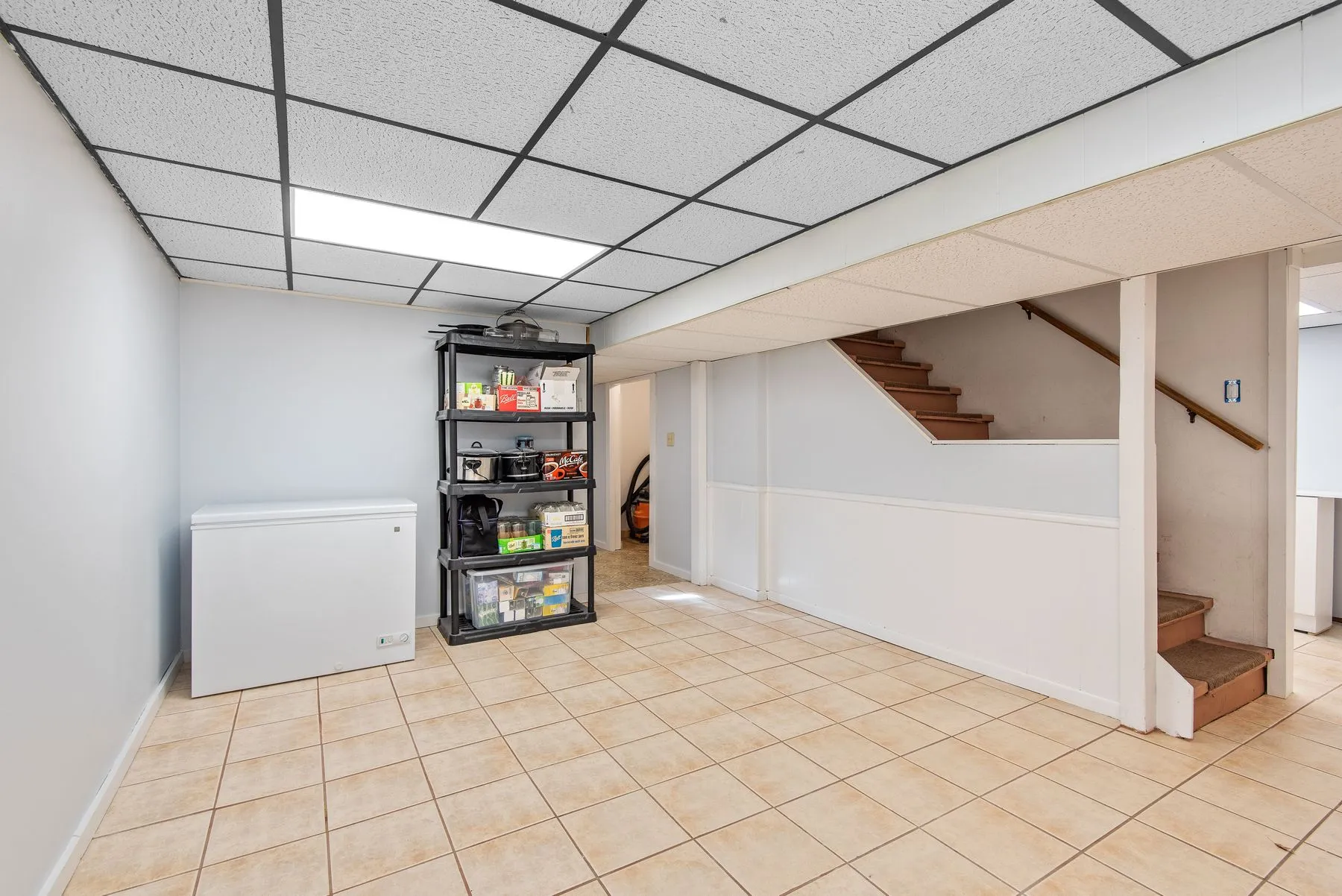
Radon usually gets in through the slab, the sump pit, and the joint where floor meets wall.
Every county has a Radon Information Center
Seventeen regional centers cover all 72 counties. The full county-by-county list is on our Radon Information Centers page.
Southeast
- Milwaukee, Waukesha, Racine
- Kenosha and Walworth
- Washington and Ozaukee
South and Southwest
- Dane, Green, Rock
- Sauk and Columbia
- Grant, Iowa, Lafayette and more
East and Northeast
- Brown, Door, Manitowoc and more
- Fond du Lac, Outagamie, Winnebago
- Marathon and the Northwoods
West and North
- Eau Claire and Chippewa Valley
- La Crosse and Monroe
- Bayfield, Polk, Dunn and more
Why radon gets into Wisconsin houses
Radon comes from uranium breaking down in the ground. It has no smell and no color, and it moves up through soil into whatever sits on top. A house pulls it in because the air inside runs slightly lower in pressure than the soil underneath, and that pull gets stronger in a long heating season with the furnace running and the windows shut.
The ways in are ordinary. Cracks in the basement slab. The joint where the floor meets the wall. An open sump pit. Gaps around pipes. Older fieldstone foundations have more of those gaps, but new construction can test high too.
Wisconsin DHS keeps an interactive map of radon test results, and it’s a good way to see where high readings turn up. DHS is clear that the map can’t tell you the risk for any single house. Our radon testing guide walks through how to get a reading you can trust, and our list of Radon Information Centers by county shows who to call locally.
What people ask first
Does my Wisconsin house need a radon test?
Yes. The Wisconsin Radon Program recommends testing every home and building. Levels can vary a lot between houses that sit close together, so a neighbor's result doesn't tell you yours.
How common is high radon in Wisconsin?
DHS says about 1 out of 10 Wisconsin homes has high radon levels. The only way to know about yours is to test.
What number is too high?
DHS treats radon above 4 pCi/L as high and worth fixing. EPA also suggests considering a fix between 2 and 4 pCi/L.
Does Wisconsin license radon contractors?
No. The state doesn't require radon contractors to be licensed or nationally certified. DHS recommends hiring someone certified by NRPP or NRSB.
Is this site a radon company?
No. We don't test, install, or sell anything. We explain how radon works and point you to certified professionals and your regional Radon Information Center.
- We don't sell tests or install systems
- Every figure links to its source
- Built on Wisconsin DHS and EPA guidance